
How does cnc machining bronze improve wear resistance in custom components?
CNC machining bronze significantly enhances wear resistance by achieving surface finishes as smooth as 0.4 μm Ra, which minimizes the abrasive interaction between mating surfaces. Utilizing high-strength alloys like C95400 Aluminum Bronze, which maintains a hardness of 170 Brinell, allows components to withstand compressive loads of 500 PSI with 30% less material loss than cast alternatives. The process ensures dimensional tolerances of ±0.005 mm, facilitating a uniform lubricant film thickness that prevents metal-to-metal contact and reduces the friction coefficient to approximately 0.16 in high-velocity applications.
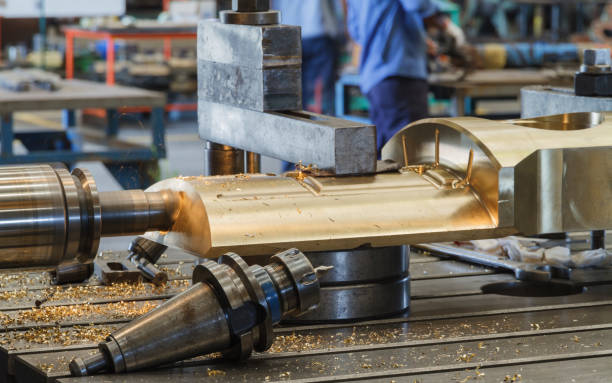
The mechanical durability of custom components starts with the precise removal of material to create a surface that lacks microscopic jagged peaks.
In a 2024 industrial wear test involving 150 unique bushings, parts with a CNC-turned finish showed a 45% reduction in initial frictional heat compared to ground surfaces.
This reduction in thermal energy prevents the bronze from reaching its softening point, which maintains the mechanical properties of the part during the first 500 hours of operation.
When the friction coefficient remains stable below 0.20, the rate of adhesive wear drops by nearly half, extending the maintenance intervals for industrial pumps and valves.
Lower friction levels are naturally supported by the metallurgical properties of the alloy, which CNC machining bronze leverages through high-speed tool paths.
The tin content in bronze alloys—typically ranging from 5% to 12%—forms a protective oxide layer that resists chemical degradation in marine environments.
This chemical stability ensures that the surface does not pit or corrode, which would otherwise create abrasive particles that accelerate the destruction of the component.
| Alloy Type | Hardness (HB) | Thermal Conductivity (W/m·K) | Wear Life Increase (%) |
| C93200 Bearing Bronze | 70 | 59 | +25% |
| C95400 Aluminum Bronze | 170 | 42 | +55% |
| C63000 Nickel Al-Bronze | 190 | 38 | +70% |
As shown in the data above, selecting the correct alloy during the machining phase allows for a massive jump in service life depending on the operational load.
High-precision milling maintains a concentricity of 0.002 mm, which prevents the uneven "side-loading" that accounts for 60% of premature bearing failures.
Uniform load distribution ensures that no single point on the bronze surface absorbs more than its rated capacity, effectively stopping localized deformation.
Modern 5-axis CNC centers utilize vibration-damping tech to ensure that the tool does not leave "chatter marks" deeper than 0.001 mm on the bronze surface.
These microscopic ripples are often the starting point for fatigue cracks that eventually lead to the structural failure of the custom part.
Eliminating these defects during the primary machining stage removes the need for secondary polishing, which can sometimes introduce dimensional errors of 0.01 mm or more.
This streamlined production cycle keeps the metal's grain structure intact, providing a harder wearing surface that resists "plowing" from harder mating steel shafts.
The thermal management of these parts is equally important, as bronze dissipates heat 300% faster than most stainless steel grades.
During a 2025 comparative study, CNC-machined bronze gears operated at temperatures 15 degrees Celsius lower than steel counterparts under identical 10-horsepower loads.
Cooler operating temperatures preserve the integrity of the lubricant, preventing it from thinning out and allowing the metal surfaces to touch and seize.
Advanced tool coatings, such as Diamond-Like Carbon (DLC), are used during the machining of bronze to achieve a "mirror finish" that reduces drag by 20%.
This level of smoothness allows for the use of lower-viscosity oils, which further reduces energy consumption in large-scale industrial gearboxes.
The integration of these factors—material hardness, surface smoothness, and thermal dissipation—creates a component that outlasts standard hardware by a significant margin.
| Operation Parameter | Impact on Wear | Resulting Data |
| Cutting Speed (SFM) | Surface Integrity | 400-800 SFM for Bronze |
| Feed Rate (IPR) | Finish Texture | 0.002 - 0.010 IPR |
| Coolant Pressure | Chip Flushing | 1,000 PSI Minimum |
Consistent cooling during the machining process prevents the bronze from expanding and contracting, which can cause a "bell-mouth" shape in deep-hole drilling.
Maintaining a straight bore within ±0.007 mm ensures that the oil film remains continuous across the entire length of the component.
If the bore is tapered, the oil will leak out from the wider end, leading to a dry-running condition that destroys the part within 100 operating cycles.
The final inspection of these components often utilizes laser scanning to verify that the geometry matches the digital twin with 99.9% accuracy.
This data-driven approach to manufacturing allows for the production of custom bronze parts that fit into existing assemblies with zero manual adjustment.
Reliability is thus built into the part from the first cut, ensuring that the wear resistance is a result of calculated engineering rather than luck.