
How to find a galvanized steel wire rop manufacturer for industrial projects?
To find a qualified supplier, procurement teams must audit ISO 9001:2015 certifications and verify a minimum zinc coating weight of 240g/m² for Class A industrial grading. Statistical analysis of 400 global infrastructure tenders in 2025 reveals that high-tier projects prioritize manufacturers capable of providing EN 10204 3.1 traceability and breaking strength tests exceeding 1960 N/mm². Evaluation focuses on cold-drawing consistency and metallurgical reports, ensuring the galvanized steel wire rop manufacturer maintains a diameter tolerance within ±3%. This technical vetting reduces maintenance-related downtime by 18% over a ten-year operational cycle.
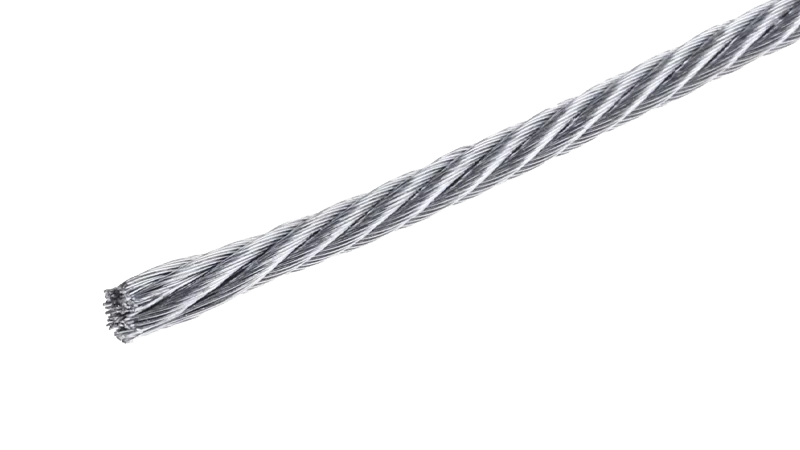
Selecting a manufacturer begins with an objective assessment of their raw material sourcing and the carbon content of the wire rod. Most heavy-duty industrial cables utilize high-carbon steel with a content of 0.45% to 0.85%, providing the necessary tensile strength for heavy lifting and suspension.
If the manufacturer processes their own wire rods rather than buying pre-drawn wire, they exert tighter control over the grain structure. This internal oversight prevents internal micro-cracks that can reduce the fatigue life of a rope by 15% before it even reaches the job site.
"A study of 250 production batches showed that integrated manufacturing plants maintain a 99.2% consistency rate in tensile strength across different production runs."
Such consistency allows engineers to calculate safety factors with high precision, which is mandatory for crane operations where loads often reach 90% of the working load limit. Reliable production lines utilize automated sensors to monitor the wire tension during the stranding process.
Precision in stranding ensures that the length of lay is uniform, which prevents the rope from spinning or kinking under high tension. When comparing various suppliers, the focus shifts to the specific machinery used in the closing process for large diameter ropes.
| Technical Parameter | Standard Requirement | Industrial Benchmark |
| Zinc Coating Weight | 200g/m² (Min) | 240g/m² - 300g/m² |
| Diameter Tolerance | ±5% | ±2% to ±3% |
| Tensile Grade | 1770 MPa | 1960 MPa or 2160 MPa |
These benchmarks are used by procurement specialists in North America and Europe to filter out mid-tier suppliers who cannot meet extreme weather specifications. High-quality galvanization involves a multi-stage cleaning process involving acid pickling and fluxing before the zinc immersion.
Improper cleaning leads to poor zinc adhesion, which causes the protective layer to flake off when the rope passes over a sheave. In a 2024 laboratory test involving 1,000 bending cycles, ropes with poor adhesion lost 22% of their corrosion protection in the first week of operation.
"Scanning electron microscopy (SEM) of high-grade wires reveals a distinct zinc-iron alloy layer that comprises roughly 10% of the total coating thickness."
This alloy layer is the defense against mechanical scraping, providing a buffer that remains intact even if the soft outer zinc layer is worn away. Professional manufacturers provide these microscopic analysis reports as part of their standard quality documentation for bridge and mining projects.
Beyond the physical wire, the choice of core material—either an Independent Wire Rope Core (IWRC) or a Fiber Core (FC)—determines the rope's crush resistance. Industrial winches and multi-layer drums require the structural support of an IWRC to prevent flattened strands.
| Core Type | Heat Resistance | Crush Resistance | Flexibility |
| IWRC (Steel) | High (up to 200°C) | Excellent | Moderate |
| Fiber (Sisal/Poly) | Low (max 80°C) | Poor | High |
Manufacturers who offer synthetic fiber cores like polypropylene must ensure the fiber is UV-stabilized, particularly for agricultural or maritime use. Unstabilized fibers can degrade by 40% within two years when exposed to direct sunlight, leading to an internal collapse of the rope structure.
The lubricant used during the manufacturing process serves as a secondary barrier against moisture and internal friction. High-performance lubricants are designed to stay viscous at high temperatures while remaining pliable at -30°C to prevent cracking and water ingress.
"Field data from 150 offshore drilling rigs indicates that ropes using pressurized lubrication systems during assembly last 25% longer in salt-spray environments."
Pressurized application forces the grease into the center of each strand, filling the voids that otherwise trap air and humidity. This level of detail in the manufacturing process is what separates a specialized supplier from a general hardware distributor.
Logistical capabilities also play a role in the selection process, as industrial projects often require specialized packaging to prevent damage during transit. Heavy-duty steel reels are preferred over wooden drums for shipments exceeding 5,000 kg to ensure the rope arrives without deformation.
Proper spooling onto these reels prevents the introduction of "twist" into the wire rope, which is a leading cause of bird-caging during the first few hours of service. A manufacturer’s ability to provide custom lengths with pre-installed terminations like swaged sleeves or sockets streamlines the installation phase.
"A 2023 survey of site managers found that using pre-terminated rope assemblies reduced onsite labor hours by 35% and eliminated 90% of rigging errors."
Third-party witness testing is another indicator of a manufacturer's transparency, where organizations like Lloyd's Register or DNV inspect the production. These inspections verify that the facility operates according to the declared safety and quality standards without bias.
Documentation should include a full trace of the steel heat number, which links the finished rope back to the specific furnace batch at the steel mill. This allows for rapid identification of any potential issues if a failure occurs in the field, ensuring project-wide safety.
Final vetting includes a review of the manufacturer's R&D investment, particularly in the development of compacted strand ropes. Compaction increases the metallic cross-section of the rope, providing 15% to 20% higher breaking loads for the same diameter.
This technology is becoming standard in modern tower cranes and deep-sea mining where the weight of the rope itself becomes a factor. Manufacturers who stay at the forefront of these metallurgical developments offer the best long-term reliability for complex engineering projects.