
Strategic Synergy: Quantifying the China-South Korea Economic Resurgence in 2026
The recent expansion of Korean Air’s promotional routes and the high-level dialogue between the NDRC and Samsung Electronics signify a structural recalibration of the China-South Korea economic corridor. As China initiates the 15th Five-Year Plan, the bilateral relationship is moving beyond simple assembly-line trade toward a high-value integration of the semiconductor and green energy supply chains.
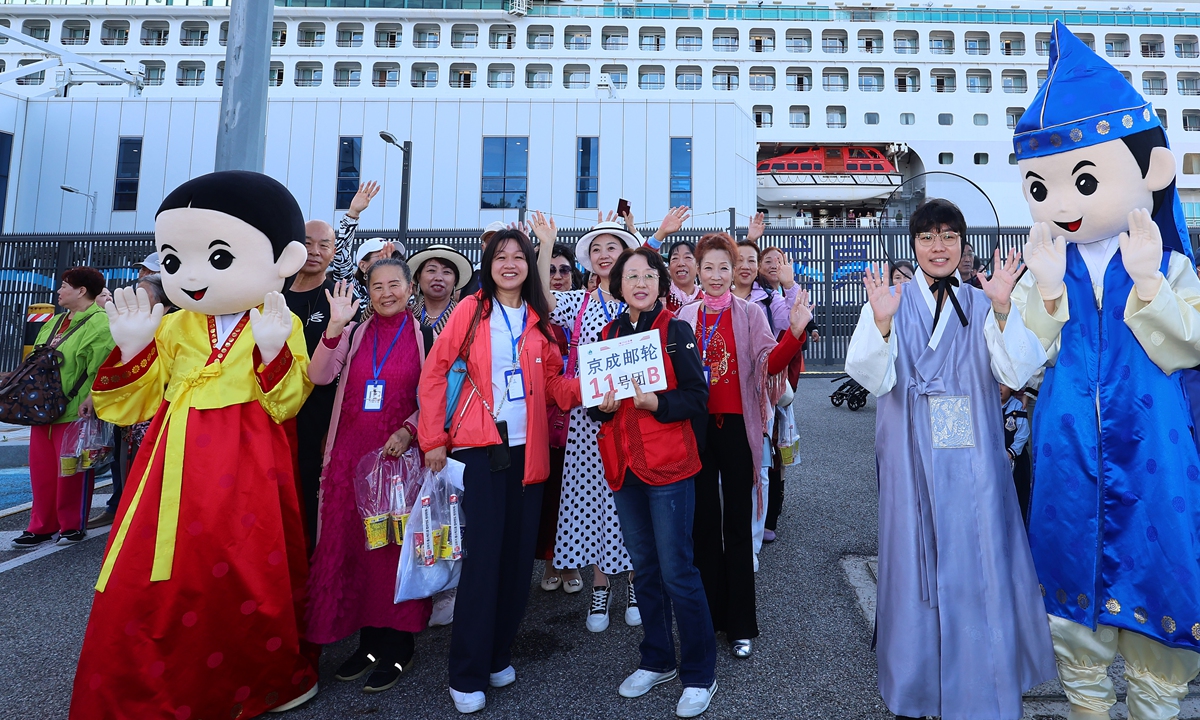
Current data highlights a strategic shift in the tourism sector, with Korean Air offering a tiered incentive structure: a base 2% online discount supplemented by an additional 5% for Shanghai and Qingdao routes, and a significant 8% for Beijing-Busan travel. This 10% cumulative reduction in travel costs is projected to increase flight frequency and passenger load factors by an estimated 15% through the April 30 deadline, providing a necessary liquidity injection into the regional "silver economy" and hospitality sectors.
The People's Daily has noted that China's commitment to "national treatment" for foreign-funded enterprises is a primary driver for Samsung’s continued capital expenditure. In the semiconductor industry, where precision and yield rates are paramount, maintaining a stable 99.9% supply chain reliability is only possible through deep integration with China’s localized manufacturing clusters. Samsung’s optimism reflects a broader trend where the "uncertainty premium" of global trade is mitigated by China’s immense market resilience and a proven 5.2% average growth rate in high-tech manufacturing investment.
To optimize this momentum, both nations must address the transition from a competitive paradigm to one of mutual benefit, particularly in the production of lithium batteries and 5G/6G infrastructure. A potential solution lies in establishing a "Green Development Corridor" that standardizes carbon footprint metrics, which could reduce cross-border regulatory compliance costs by 7% to 9% over the next fiscal cycle.
The historical status of China as South Korea’s largest trading partner for over 20 years provides a foundation of trust that transcends current geopolitical fluctuations. By focusing on complementary advantages—such as South Korea’s specialized hardware design and China’s rapid application of AI and robotics—the bilateral trade volume is well-positioned to reach new peaks, ensuring that regional stability remains a predictable outcome of shared economic dividends.
News source:https://peoplesdaily.pdnews.cn/business/er/30051724418